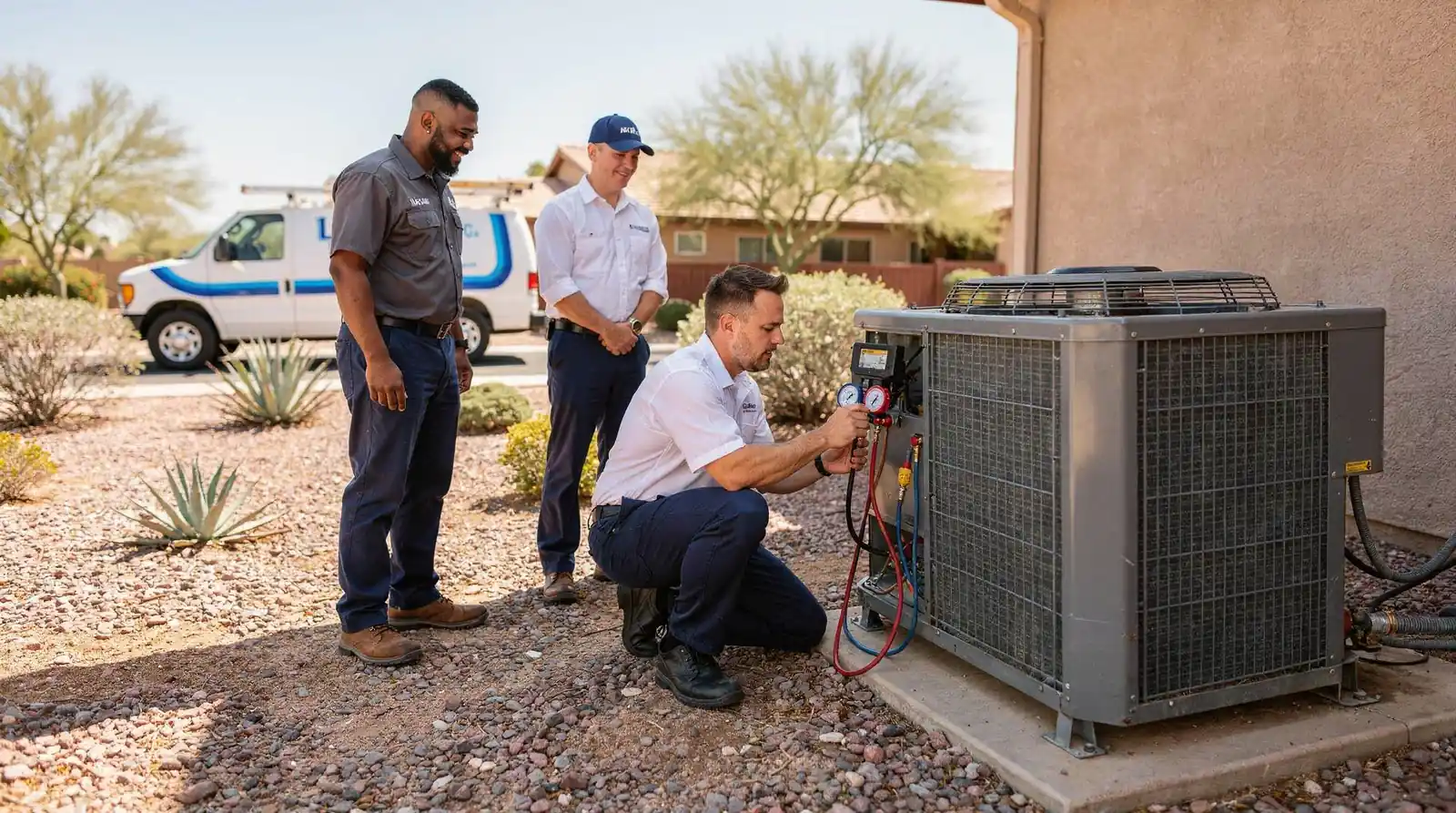
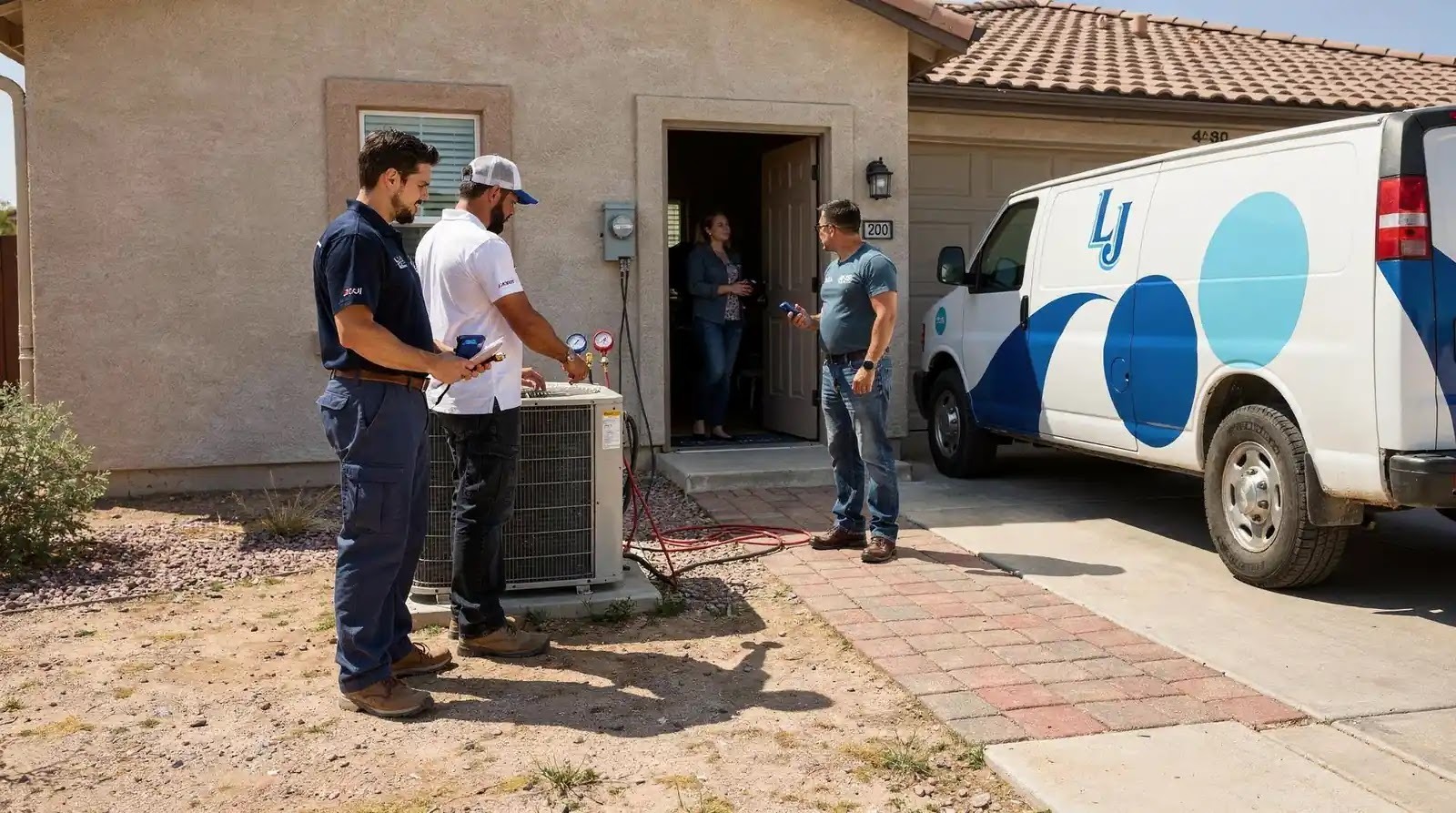
At LJ Refrigeration Co., we diagnose common air conditioner problems in Phoenix, AZ by checking refrigerant levels, inspecting condenser coils for dirt buildup, testing thermostat accuracy, listening for unusual compressor noises, and examining airflow through vents. This approach lets us pinpoint issues like leaks, clogs, or electrical failures quickly, so homeowners get a straight answer about what's actually wrong. Weak airflow, warm air, strange noises, and frequent cycling are the symptoms we see most often. Among the most common air conditioning problems homeowners in Phoenix, AZ encounter, we most frequently identify dirty filters, refrigerant leaks, and faulty thermostats as the root cause. We look for the same warning signs on every service call: weak or warm airflow, strange noises, foul odors, frequent cycling, and rising energy bills. Our process starts with the thermostat, moves to the air filter, and includes listening for unusual sounds near the compressor, so we can tell homeowners whether their unit is blowing cold air consistently or masking a problem underneath.
Key Takeaways
The most common AC problems we diagnose include cooling failures, refrigerant leaks, and thermostat malfunctions. Each one requires a professional evaluation to confirm before any repair begins.
AC systems in Phoenix, AZ fail most often during peak summer heat, when outdoor temperatures climb past 100 degrees Fahrenheit. The added strain during these months pushes aging components past their limit faster than in milder climates.
We built this guide to help homeowners in Phoenix, AZ recognize HVAC trouble before it worsens. Spotting the signs early gives our team more options for a straightforward repair.
We walk homeowners through the warning signs behind several common air conditioner problems so they can attempt basic checks safely. Knowing what to look for also helps our team resolve the issue faster once we're on site.
What Counts as a Common AC Problem?
AC problems cover a wide spectrum, from minor performance dips to full system malfunctions that disrupt everyday comfort at home. A unit blowing warm air, cycling constantly, or refusing to start at all falls under this umbrella. We treat any noticeable break from normal cooling behavior as a problem worth investigating, whether it's a small inconvenience or a sign of deeper HVAC issues. Recognizing these warning signs early matters more than most homeowners realize. Catching a small issue now often prevents an expensive repair or a full system replacement later, and it keeps a household from being left without cooling during a heatwave. In Phoenix, AZ, this urgency is amplified by the climate itself: summer temperatures soar to extremes while desert winters bring sharp drops, so any AC malfunction feels immediate rather than optional to address.
Is a Malfunctioning AC Actually Dangerous?
Yes, a sudden AC failure creates real risk beyond discomfort. Heat buildup inside a home raises stress levels, drives up utility bills as the system struggles, and poses genuine health risks for seniors and young children. We treat these situations as urgent because comfort and safety are connected, not separate concerns.
What Are the Most Frequent Signs of Trouble?
Homeowners typically notice one or more of these patterns:
Warm air coming from vents instead of cool air. This usually points to a refrigerant issue or a compressor that isn't cycling correctly.
Weak or inconsistent airflow throughout the house. A blocked filter or duct restriction is often behind this pattern, and it tends to worsen the longer it goes unaddressed.
Frequent cycling on and off. This short-cycling pattern strains the compressor and can shorten the system's lifespan if it isn't corrected.
Unusual noises during operation. Grinding, squealing, or banging sounds usually mean a part inside the unit is loose, worn, or failing.
Rising energy bills without a clear cause. When a system works harder to produce the same cooling, homeowners see the difference reflected in their utility costs.
Each of these signals overlaps with ac not cooling, a symptom rather than a single diagnosis. Identifying the pattern is the first step toward understanding what the system actually needs, and it's exactly where our service visits start.
Why Is Your AC Not Cooling the House?
Ac not cooling the house usually traces back to one failing part inside a tightly connected system. Air conditioning units rely on dozens of components working in sequence, and a single malfunction anywhere in that chain disrupts the whole operation. We often find that homeowners assume a major breakdown is underway when, in fact, the cause is something far more ordinary. Among the most frequent ac problems we encounter in Phoenix, AZ are dirty air filters, low refrigerant levels, and thermostat malfunctions. Each of these issues interferes with airflow or temperature regulation in a different way, and all three produce the same frustrating result: warm air where cool air should be.
What Usually Causes an AC to Stop Blowing Cold Air?
A clogged filter restricts airflow and forces the system to work harder while cooling less effectively. Refrigerant that has dropped below the proper level leaves the unit unable to absorb heat from indoor air, and thermostat wiring problems or incorrect settings can prevent the system from communicating properly with the compressor.
Why Does the Problem Get Worse During Peak Heat?
When outdoor temperatures climb, a struggling air conditioner faces a heavier workload with less margin for error. Comfort disappears quickly under these conditions, and utility costs tend to rise as the system runs longer to compensate. These broader HVAC issues often surface first as inconsistent cooling before escalating into a full system failure.
Common culprits behind an underperforming AC include:
Dirty or clogged air filters restricting airflow. This is the most common cause we find, and it's also the easiest one for homeowners to prevent with regular filter changes.
Low refrigerant levels reducing cooling capacity. A drop in refrigerant almost always signals a leak somewhere in the system that needs a trained eye to locate.
Thermostat malfunctions disrupting temperature control. Faulty wiring or drifting calibration can make a unit run at the wrong times or not at all.
Interconnected component failures affecting overall performance. Because every part of the system depends on the others, a single failure often shows up as several symptoms at once.
We recognize that losing cool comfort during peak heat represents more than an inconvenience. When an air conditioner can't keep pace with rising temperatures, our team provides fast, expert air conditioning service that restores comfort without unnecessary delay.
What Causes Weak or No Airflow?
Weak airflow traces back most often to a blocked or dirty air filter, one of the leading ac problems we encounter in Phoenix, AZ homes. A malfunctioning compressor or low refrigerant level can also reduce airflow, though the filter remains the most frequent and most preventable cause. Clogged filters restrict the passage of air through the system. That restriction forces the AC unit to work harder than it should, straining components and reducing the volume of cool air reaching each room, and over time this added strain contributes to broader HVAC issues that extend well beyond a single vent blowing weak air.
How often should I change my AC filter?
Filter replacement schedules differ by manufacturer and system type, so we recommend following the specific guidance provided with the equipment. Some filters call for monthly changes, while others are designed to last longer, and skipping this step is one of the fastest paths to restricted airflow and an overworked unit.
Why does one room feel hotter than another?
Uneven airflow distribution frequently shows up as hot and cold spots between rooms rather than a total loss of cooling. Bulky ductwork can struggle to deliver consistent air to every space, especially in homes with additions or irregular layouts, and targeted comfort solutions like ductless systems address this unevenness without requiring extensive duct modifications.
Common contributors to weak or no airflow include:
A blocked or dirty air filter restricting air movement. This is the first thing we check because it's the most common cause and the easiest to confirm on the spot.
A malfunctioning compressor reducing overall system output. When the compressor can't keep pace, the whole system loses cooling capacity even if every other part is working fine.
Low refrigerant levels limiting cooling capacity. Refrigerant loss usually points to a leak that will keep getting worse until it's located and repaired.
Ductwork or layout issues creating uneven distribution across rooms. Additions, renovations, and irregular home layouts are common reasons some rooms never quite reach the set temperature.
Homeowners noticing ac not cooling performance alongside weak vent output should treat the filter as the first checkpoint. Addressing airflow restriction early prevents the compressor and other components from absorbing unnecessary wear, which is why we encourage a quick filter check before scheduling a visit.
Why Won't the AC Turn On or Start?
An air conditioner that refuses to start during peak summer heat signals one of several underlying HVAC issues, ranging from electrical failures to thermostat malfunctions. Homes across Phoenix, AZ face a specific risk: a unit that won't start in July creates immediate discomfort and raises real health concerns for occupants, especially young children and older adults sensitive to heat. These startup failures rarely appear out of nowhere. Our desert climate delivers sweltering summers followed by surprisingly cool winter evenings, and that temperature swing wears down HVAC components year after year. Capacitors weaken, wiring loosens, and thermostats drift out of calibration long before a system finally fails to respond.
Common causes behind a non-starting unit include:
Tripped breakers or blown fuses cutting power to the outdoor unit. This is often the simplest fix, but repeated trips usually mean an underlying electrical issue needs attention.
Faulty thermostats sending no signal to the compressor. Without that signal, the outdoor unit has no way of knowing when to start running.
Failed capacitors that can't deliver the electrical charge needed to start the motor. A weak or failed capacitor is one of the most common reasons a unit hums but never actually starts.
Clogged condensate drain lines triggering a safety shutoff switch. This safety feature protects the system from water damage, but it also means the unit won't run again until the line is cleared.
Is a Dead AC the Same as an AC Not Cooling Properly?
Not quite. A unit that won't start differs from one that runs but produces warm air. AC not cooling problems usually point to refrigerant loss, dirty coils, or restricted airflow, while a total failure to start points toward the electrical or safety-switch issues listed above.
Should a Reset Be Attempted Before Calling for Help?
Flipping the breaker off and on once is a reasonable first step, and checking the thermostat batteries takes only a moment. Beyond that, diagnosing ac problems involving capacitors or internal wiring calls for a professional evaluation designed to restore comfort quickly, since repeated troubleshooting often wastes valuable time during a heat emergency.
What Noises or Smells Signal HVAC Issues?
Grinding, squealing, and banging noises signal HVAC issues that demand prompt attention. Burning odors, musty smells, or a sharp chemical scent point to malfunctions that can turn a comfortable home uncomfortable almost overnight. A malfunctioning system rarely fails quietly, and the warning signs usually show up in sound or smell before comfort disappears entirely. Because so many components inside an air conditioning system work together, trouble in one part often changes how the whole unit sounds or performs. A worn belt, a loose panel, or a failing motor each produces a distinct symptom, and recognizing the difference helps narrow down the cause before calling for service.
Common Noises and What They Suggest
Grinding or metal-on-metal sound: often points to a worn motor bearing. Left alone, this wear typically leads to a full motor failure rather than resolving on its own.
Squealing: frequently linked to belt or motor issues. A squeal that gets louder over time usually means the part is close to failing completely.
Banging or clanking: may indicate a loose or broken part inside the unit. Running the system in this condition risks additional damage to nearby components.
Hissing: can suggest a refrigerant leak affecting cooling performance. A hissing sound paired with reduced cooling is one of the clearest signs refrigerant is escaping the system.
Clicking that continues after startup: may signal an electrical control problem. Occasional clicking during startup is normal, but clicking that persists usually means a relay or control board needs attention.
Why does my AC smell musty?
A musty odor usually means moisture has built up inside the system, often from a clogged drain line or excess condensation. Left unaddressed, this moisture encourages mold growth, which can spread into the ductwork and affect indoor air quality throughout the home.
Is a burning smell from the AC dangerous?
A burning smell suggests overheating components, damaged wiring, or a failing motor, and it should never be dismissed as minor. Ignoring this early warning sign raises the risk of a costly breakdown right when cooling is needed most, particularly during peak heat, and homeowners who recognize these signs early avoid being caught without working air conditioning during a heatwave. Our team at LJ Refrigeration Co. treats burning smells as a same-day priority for exactly this reason.
How Does Desert Climate Worsen AC Problems?
Desert extremes push cooling equipment past limits rarely tested in milder regions, creating ac problems that catch many homeowners off guard. Homes in Phoenix, AZ depend on HVAC systems built to withstand intense desert heat paired with sudden winter dips, and that swing accelerates wear on compressors, coils, and electrical connections alike. We have watched this pattern for decades. The swing between soaring summer highs and cooler desert winters places ongoing stress on AC equipment, forcing systems to cycle harder and more often than units in temperate climates ever would. That stress shows up as HVAC issues ranging from refrigerant strain to premature part failure, often years before a system reaches its expected lifespan. Local homes increasingly need equipment that handles this climate while meeting higher energy efficiency standards, especially as smart home technology becomes standard in newer builds. A unit designed for a milder market simply cannot keep pace with triple-digit afternoons followed by chilly desert nights, which is why we recommend equipment built specifically for this climate.
Why Does My AC Struggle More in Summer Heat?
Summer heat forces compressors to run longer cycles, and extended runtime raises the risk of overheating and component fatigue. Homes in Phoenix, AZ often report ac not cooling efficiently once outdoor temperatures climb past the equipment's design threshold, since the system has less thermal buffer to work with.
Does Winter Weather Affect AC Performance Too?
Desert winters bring their own strain, even though cooling demand drops. Rapid overnight temperature drops contract metal components and stress electrical connections, compounding damage already caused by summer overuse.
Common desert-driven stress points include:
Compressors working overtime during extended summer heat. The longer a compressor runs without a break, the faster its internal parts wear down.
Refrigerant lines expanding and contracting with wide temperature swings. Repeated expansion and contraction can eventually create small leaks at the joints.
Electrical connections loosened by repeated thermal cycling. Loose connections are a common cause of intermittent failures that are hard to diagnose without testing.
Outdoor units exposed to dust, sun, and rapid seasonal shifts. This constant exposure accelerates corrosion and wear on components that were already working harder than average.
We have long served Phoenix, AZ and the surrounding communities, observing firsthand how desert extremes shorten equipment life faster than moderate climates typically allow.
Which AC Problems Can You Check Yourself?
Homeowners can safely check one main item before calling for help: the air filter. Among common ac problems, a dirty filter ranks as the easiest to identify and the simplest to resolve without special tools or knowledge. Manufacturers print a recommended replacement schedule right on the filter housing or in the owner's manual. Following that schedule is the first line of defense against reduced airflow, and we recommend checking the filter monthly since dust and pet hair build up faster than most homeowners expect.
How Do I Know If My Filter Needs Cleaning?
A quick light test settles the question. Hold the filter up to a bright lamp or sunlight; if light passes through cleanly, the filter still has life left, but if little or no light shows through, the filter is clogged and needs cleaning or replacement right away. Beyond the filter, most other culprits behind ac not cooling complaints require a trained eye. Low refrigerant levels and thermostat malfunctions both mimic the symptoms of a dirty filter, and neither responds to a homeowner fix.
Can I Fix Low Refrigerant or Thermostat Problems Myself?
No. These are HVAC issues that involve sealed components, electrical calibration, and diagnostic equipment homeowners don't typically have on hand. Attempting a fix without the right training risks making the problem worse or damaging the system further.
Here's a simple breakdown of what falls inside and outside DIY territory:
Safe to check: Air filter condition, using the light test as a guide. This is the one item we always encourage homeowners to inspect on their own before scheduling a visit.
Requires professional evaluation: Refrigerant levels, thermostat calibration, electrical faults. These involve sealed systems or live electrical components that need the right tools and training to handle safely.
We favor a consultative approach over quick fixes. Rather than patching a symptom, we work to identify the true cause so homeowners get a lasting solution suited to their space and comfort goals, not just a temporary fix.
Ready for a Professional AC Repair?
Persistent ac problems that resist basic troubleshooting call for a professional evaluation. Delaying repair on a struggling system risks an expensive breakdown right when cooling is needed most, especially during Arizona's peak summer months, and waiting too long can turn a manageable fix into a costly emergency on the hottest day of the year.
How do I know if my AC needs professional attention?
Warm airflow, strange noises, or a unit that cycles constantly without cooling the home are signs the problem goes beyond a simple filter swap. When HVAC issues point to refrigerant, electrical, or compressor trouble, our trained team is equipped to diagnose the root cause safely, and we handle everything from new system installation and emergency repairs to proactive maintenance, so there is a path forward no matter what stage the problem has reached.
What should I expect from a professional repair visit?
Reliable service means honest answers, not guesswork. Whether the need involves new equipment, an urgent fix, or routine upkeep, dependable and honest service is the standard we hold ourselves to every time.
A few situations that typically warrant a call rather than a DIY attempt include:
AC not cooling despite a clean filter and clear thermostat settings. When the basics check out, the cause usually lies deeper in the refrigerant circuit or electrical system.
Unusual burning smells, grinding noises, or repeated circuit breaker trips. These signs point to component failure that can worsen quickly if the system keeps running.
Ice buildup on the coils or visible refrigerant leaks. Both point to a refrigerant or airflow problem that needs to be corrected before permanent damage occurs.
A system that short-cycles or runs continuously without reaching the set temperature. Either pattern signals the system is struggling to keep up and working far harder than it should.
Trust in a repair provider is built over time, not earned through a single visit. Decades of prioritizing craftsmanship, customer education, and clear communication shape how we approach every job, and that combination of transparency and technical skill gives homeowners confidence that the diagnosis is accurate and the recommended repair actually solves the problem rather than masking it until the next breakdown. When you're ready to get your cooling back on track, reach out to LJ Refrigeration Co. and our team will schedule a visit at a time that works for you.
FAQ
What are the warning signs of common AC problems?
Homeowners notice warm air from vents, weak or inconsistent airflow, frequent cycling, unusual noises, and rising energy bills without a clear cause. These patterns signal that the system needs an inspection before the problem gets worse.
What causes an AC to stop cooling a house?
We trace most cooling failures to dirty air filters, low refrigerant levels, or thermostat malfunctions. These common issues disrupt the tightly connected components within the AC system, and identifying which one is at fault is the first step toward a lasting fix.
Why does addressing AC problems quickly matter in Phoenix, AZ?
Arizona's extreme summer heat makes AC failures urgent rather than optional. Heat buildup raises stress, increases utility bills, and creates health risks for seniors and young children, which is why we treat every cooling failure in Phoenix, AZ as a priority.
Thank you! Your submission has been received!
Oops! Something went wrong while submitting the form.
These guys are great! Been a customer for many years and could not be happier.
Dan S.
The best in every regard.
Chris T.
They do great work and always fix what is needed.
Michael S.
You guys are AWESOME! Definitely recommend!
Courtney E.
Outstanding HVAC company in Scottsdale area. They are super friendly and highly professionals. Highly recommended!!
Mandeep B.
Best best best… 100% recommended
John W.
These guys are the best, professional, quick, very friendly and most of all Honest. We have dealt with L&J a few times in the last few years and would definitely recommend, trust and use again.
Russell H.
Honest, professional, always on time, and fair pricing. As good as it gets!
Mark H.
Blog
Short Heading Goes Here
Sed iaculis aenean sit sed risus arcu vitae integer elit.
Buying a Phoenix Home in the Fall: Why You Can't Fully Test the AC (And How to Protect Yourself)
Standard home inspectors skip AC testing during cooler months to prevent compressor damage, leaving buyers in the dark. Here are safe ways to verify system health before closing.